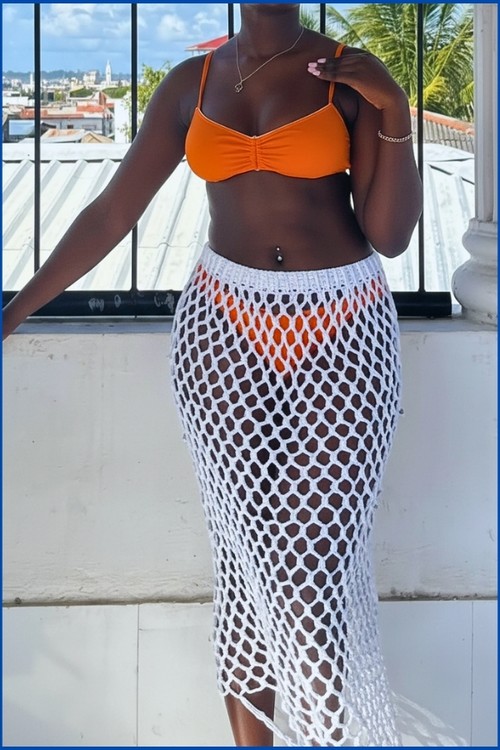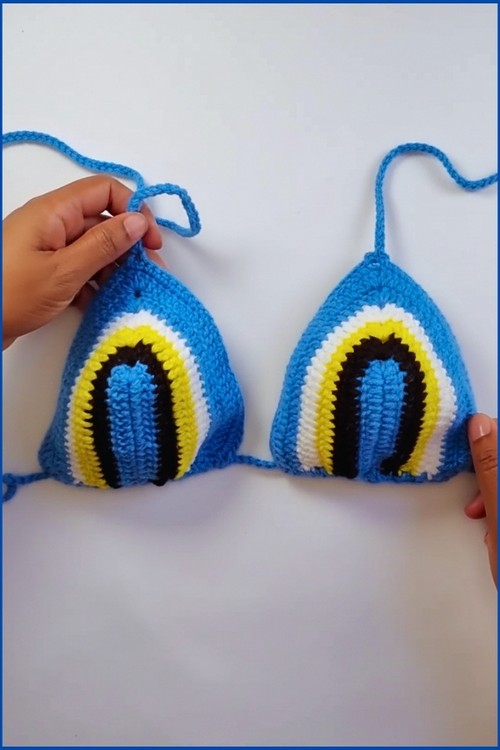
A cowl-draped halter with a color-block skirt is a lot of outfit for not a lot of stitches the drape does the styling work for you, pooling softly at the neckline so it looks designed rather than fussed over. Worked in a cool variegated teal against cream, it reads resort-ready straight off the hook. If the draped-neckline look is what pulls you in, you’ll also like this cowl-neck going-out top.
Crochet Beach Wear Top And Skirt

The set splits into two easy makes: a wide rectangle for the top that folds into that cowl once it’s hung from the halter ties, and a straight color-block tube for the skirt worked in simple rows with a clean color change down the middle. Neither piece asks for shaping, so it’s genuinely beginner-friendly despite the polished result and the two-piece format means you can wear them together or split them with other makes, the same way you might layer this quick V-neck beach wear top over a swimsuit.
Materials
- Super thin yarn in two colors
- 2.5 mm crochet hook
- 3.0 mm crochet hook
- Scissors
- Stitch markers
Stitch Notes for This Pattern
Skirt Vertical Panels
- Create a slip knot and chain 100 or enough chains to reach from waist to desired hem length
- Skip two loops and work one half double crochet in each loop across the row
- Chain 2, turn, and work one half double crochet in each stitch for every following row
- Work 30 rows in the first color
- Switch to the second color and work 30 rows

- Repeat alternating colors until the panel width matches your hip measurement
- Bring the short edges together and join with slip stitches to form a skirt tube
Waistline And Ribbing
- Work one double crochet into each stitch around the top edge of the skirt
- Chain 3 and alternate front post double crochet and back post double crochet around
- Continue the same ribbing pattern for a total of three rows
- Crochet a long chain and weave it through the ribbing to create a drawstring
- New to crochet and not sure how to read a pattern yet? The video tutorial below will guide you through it step by step, you’ve got this!
Draped Top Panel
- Switch to the 3 mm hook and hold both yarn colors together
- Chain a length equal to your shoulder to shoulder measurement
- Work one half double crochet in each chain across
- Chain 3 and work one double crochet in the first stitch
- In the next stitch, work a bulk double crochet by wrapping the yarn three times and completing the stitch
- Alternate one regular double crochet and one bulk double crochet across the row
- Alternate one full row of half double crochet and one bulk stitch row until you complete ten of each
- Work ten final rows of half double crochet only to finish the top panel

Assembly And Straps
- Mark the center of the skirt and the center of the top panel
- Join the top to the skirt using single crochet, working more skirt stitches than top stitches to create drape
- Work one row of double crochet along the top edges
- Continue crocheting from the corners to form sturdy straps for tying behind the neck or back
Understanding the Construction
The skirt is worked sideways. Your starting chain determines the length of the skirt from waist to hem. The rows you add determine the circumference. This is important. Many crocheters instinctively think foundation chain equals waist size. In this design, it equals length.

- The vertical half double crochet rows create long lines that visually elongate the body. Alternating colors in 30 row blocks creates bold striping without interrupting stitch rhythm.
- The top is also a rectangle, but the stitch texture adds interest. The bulk double crochet stitches create raised vertical emphasis, which pairs nicely with the skirt’s vertical flow.
- The drape happens during assembly. By intentionally fitting more skirt stitches into fewer top stitches, the fabric gathers slightly, creating softness instead of tension.
Fit and Sizing Guidance
Skirt Length
Your initial chain controls the finished length.
Measure from your natural waist to where you want the hem to fall. Keep in mind:
- Super thin yarn stretches slightly with wear.
- Half double crochet has moderate vertical flexibility.
- Blocking will smooth but not dramatically lengthen this fabric.
If between two lengths, slightly shorter is safer because the weight of the skirt can add drop.
Skirt Width

Continue alternating color blocks until the panel wraps comfortably around your hips. Measure around the fullest part of your hips, not your waist.
When checking fit:
- Lay the panel flat.
- Gently stretch it to natural tension.
- Avoid measuring while pulling tightly.
A close but not tight fit works best, since ribbing and drawstring will secure the waist.
Top Width
The top panel chain equals your shoulder to shoulder measurement. Measure across your back from shoulder point to shoulder point. Do not include upper arm.
If you prefer more drape, add a few extra chains. If you want less gathering, stay precise with measurement.

Stitch and Shaping Clarity
Why Skip Two Loops at the Start
Skipping two loops before your first half double crochet helps maintain a clean edge and keeps the row height consistent. It prevents the edge from pulling inward.
Consistency in Half Double Crochet
- Because the skirt is entirely half double crochet rows, tension consistency is essential. Uneven tension will show clearly in vertical stripes.
- Keep your yarn flow smooth and your turning chain consistent in height.
Bulk Double Crochet Explanation
When you wrap the yarn three times before inserting your hook, you are creating extra height and thickness.
Complete the stitch gradually:
- Insert hook.
- Pull up a loop.
- Yarn over and pull through two loops at a time until one loop remains.
Do not rush these stitches. If pulled too tight, they lose definition.
The contrast between regular double crochet and bulk double crochet is what gives the top texture and dimension.
Creating Balanced Drape
During assembly, you are instructed to work more skirt stitches than top stitches. This is deliberate.
If you match stitch for stitch, the top will sit flat and structured. By compressing the top slightly into the skirt edge, you create soft gathers.
Work slowly during this step:
- Pin or clip in quarters first.
- Confirm centers align.
- Evenly distribute the excess skirt stitches.
This prevents bunching in one area.
Beginner Notes
This project is approachable but requires patience.
- Super thin yarn means more stitches and more rows.
- Small hooks mean slower progress.
- Color changes should be done at the end of a row for clean transitions.
If you are new to front and back post stitches, practice a small swatch first. Proper placement around the post, not the top loops, creates the ribbed waistband effect.
Troubleshooting
Skirt Twisting After Joining
Before slip stitching the short edges together, lay the panel flat and confirm there is no twist. A twisted join cannot be corrected later without undoing.
Ribbing Too Tight
Front and back post stitches can tighten fabric. If the waistband feels restrictive, adjust tension slightly or use the larger hook just for ribbing.
Top Panel Curling
Bulk stitches can create slight curl due to height variation. Blocking after finishing will relax the fabric.
Finishing Notes
- Weave in ends securely, especially at color change points.
- Light blocking helps the vertical lines fall cleanly.
- Adjust drawstring length generously so tying remains comfortable.
- Reinforce straps if you prefer extra strength by working an additional return row.
This set depends more on measurement and balance than on complexity. Take your time with sizing, keep your stitches consistent, and let the fabric do the work.