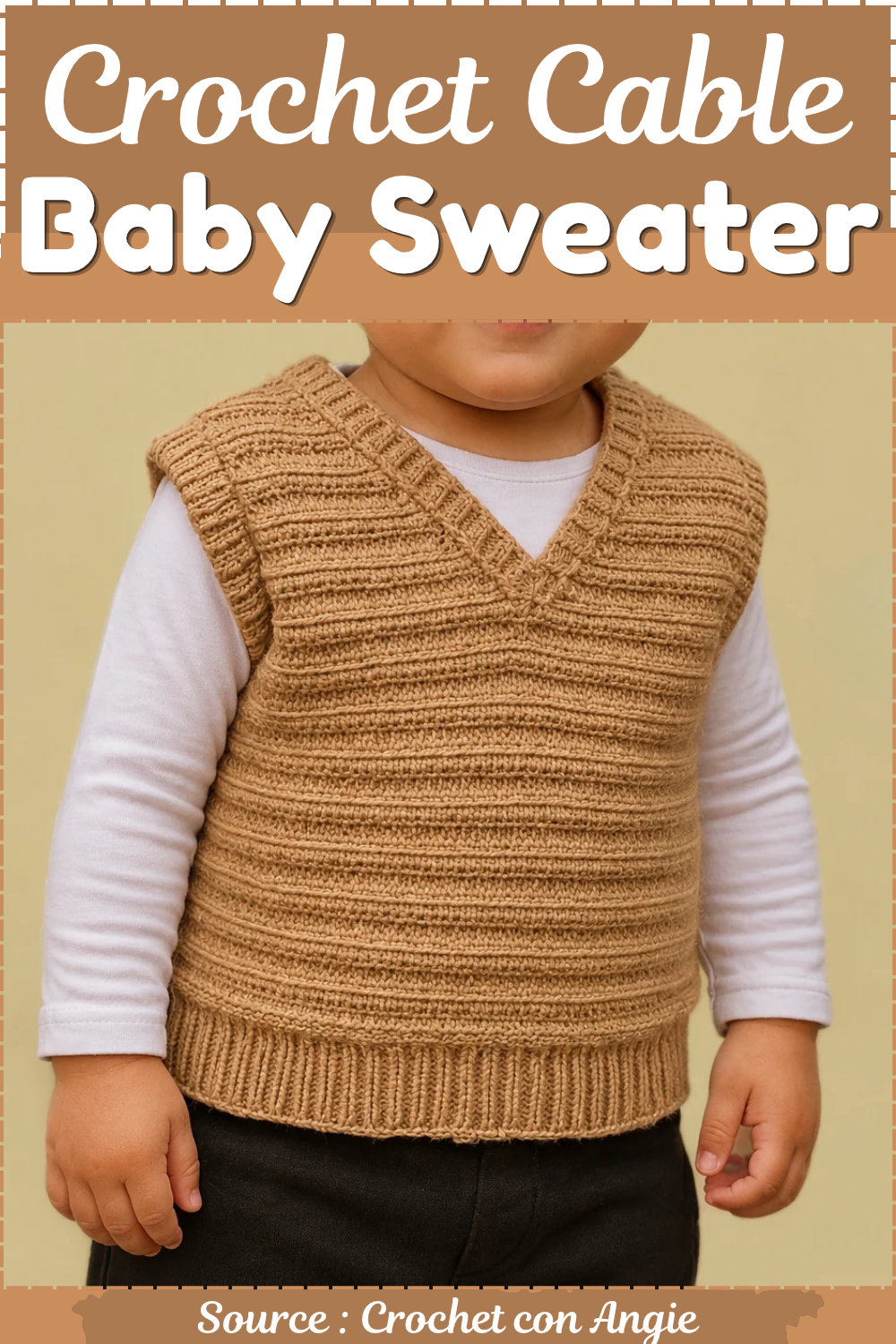
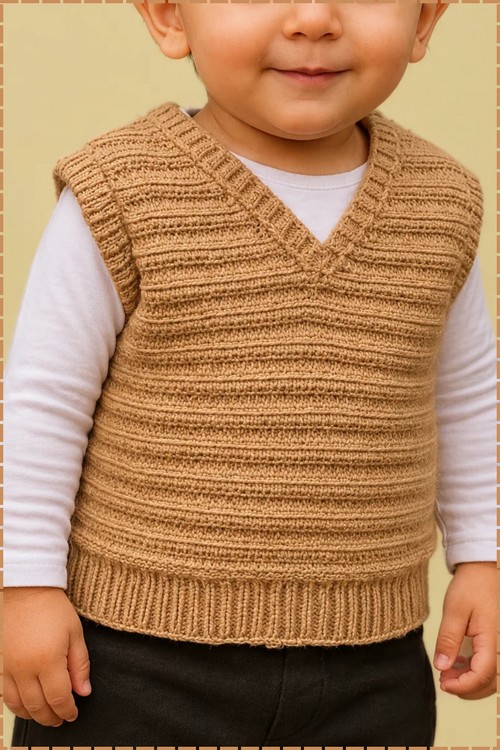
Slip the caramel brown vest from this free boy crochet sweater pattern over a white long sleeve tee and dark trousers for school mornings and family photos. Little boys get a knit look sweater vest with a deep V neckline and snug ribbed hem, leaving their arms free for play.
A quick-facts vest built for a 3-year-old boy, worked flat from the bottom hem up in simple rows, then divided at the underarms into a back panel and two front panels with gradual neckline shaping. No sleeves, no complex construction, just clean rows, a tidy border finish, and a lightweight fabric that works across seasons.
Crochet Cable Baby Sweater
If you can work half double crochets or double crochets in rows and read basic shaping steps, you can finish this in a weekend. The sizing is easy to adjust up or down by measuring the child and modifying the starting chain count.
Quick Facts
- Difficulty: Easy to intermediate beginner
- Size: Designed for age 3; adjust chain count for other sizes
- Hook: 4.0 mm
- Yarn: Thin yarn — sport weight or lightweight DK
- Construction: Worked flat in rows, bottom up
Materials and Tools
- Thin yarn, sport weight or lightweight DK, in your chosen color
- 4.0 mm crochet hook
- Tapestry needle
- Scissors
- Measuring tape
Customization Ideas
- Scale the pattern up or down for any toddler size by measuring the child’s chest and desired vest length before chaining; the stitch count follows those measurements directly.
- Work the main body in half double crochet for a softer, denser fabric, or double crochet for a slightly more open, draping result.
- Add a second color for the border trim to make the neckline and armhole edging stand out.
- Work the border in a ribbed slip-stitch edging instead of single crochet for a more structured, fitted look around the armholes and hem.
- For a girl’s version, work the front panel division in reverse so the button band sits on the left side, or leave it open with ties instead.
The Pattern
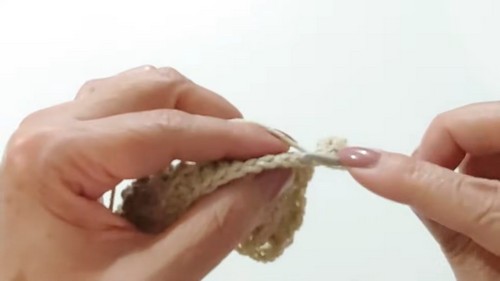
Foundation and Bottom Band
- Measure the toddler’s chest circumference and desired vest length before starting; these measurements determine your foundation chain length.
- Using the 4.0 mm hook and your thin yarn, chain to a length that corresponds to the chest or waist measurement, adjusting as needed to meet any multiple required by your chosen stitch pattern.
- If working a ribbed bottom band first, complete it before beginning the main body rows.
Main Body
- Work the chosen stitch — half double crochet or double crochet — evenly across the foundation row.
- Continue working back and forth in rows, turning at the end of each row, until the piece reaches the desired length from the bottom hem up to the underarms.
Armhole Division and Panel Shaping
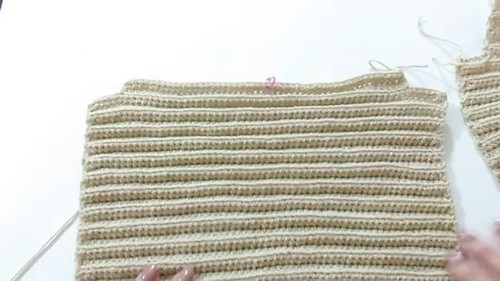
- Divide the total stitch count into three sections: the back panel in the center and a front panel on each side.
- Work the back panel section straight upward in rows to the shoulder height, leaving the side stitches on each edge unworked to form the armhole openings.
- Work the left front panel separately, leaving the corresponding armhole gap unworked on its inner edge.
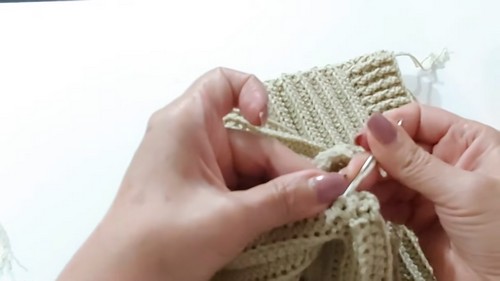
- Work the right front panel the same way.
Neckline and Shoulder Seams
- On each front panel, gradually decrease stitches along the inner edge to shape the neckline opening cleanly.
- Once both front panels and the back panel reach the shoulder height, join the front and back panels at the shoulder seams.
Border and Finishing
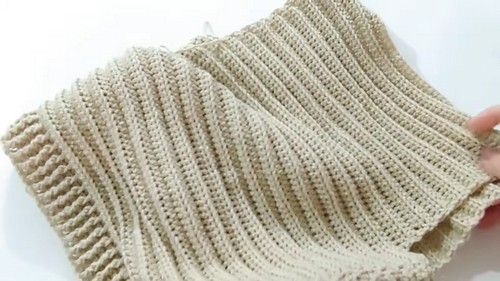
- Work a neat border of single crochet, or a ribbed edging of your choice, around each armhole opening.
- Work the same border along the bottom hem.
- Work the border around the full front opening and neckline edge.
- Fasten off, cut the yarn, and use the tapestry needle to weave in all remaining ends securely.
Tips
- Measure twice before chaining. A foundation chain that is too short cannot be lengthened without starting over; a chain a little too long is easier to manage during the border row.
- When dividing for the armholes, use stitch markers to clearly mark where each section begins and ends before you separate the panels. This prevents accidentally working into the wrong section at the start of a row.
- Work the border edging with slightly tighter tension than the main body. A firmer border keeps the neckline and armhole edges from stretching out of shape with wear and washing.
Yarn Substitution
A sport weight or lightweight DK yarn keeps this vest light enough to layer under or over other clothes without bulk. Cotton or cotton blend at this weight is an especially practical choice for toddler wear: it is breathable, machine washable, and holds its shape well after repeated washing. A soft acrylic at sport weight works equally well and comes in a wide range of colors. Avoid anything too heavy; a bulky or worsted yarn at a 4.0 mm hook will produce a stiff, uncomfortable fabric for a child’s garment.
FAQ
How do I know how many stitches to chain for my child’s size? Measure the chest circumference of a vest or shirt that fits the child well and use that as your target width. Crochet a small swatch in your chosen stitch with your yarn and hook, measure how many stitches equal one inch, and multiply by your target width to get your starting chain count.
Can I add a button band to this vest? Yes. After the front panels are finished and the border is worked, you can add a separate button band by working a few rows of single crochet or back-loop-only half double crochet along the front edge, then sewing buttons to one side and adding buttonholes to the other.
What if the armhole opening looks too large or too small after dividing? The armhole size is controlled by how many stitches you leave unworked on each side when dividing for the panels. If it looks too large, reduce the gap stitches by a few; if too small, increase them. The border edging row also slightly reduces the visual size of the opening, so try the vest on the child before deciding to adjust.
Is this vest suitable for boys and girls? The construction works for any toddler. The styling depends on color choice and any additions like buttons or ties. Nothing in the construction itself is gender specific.