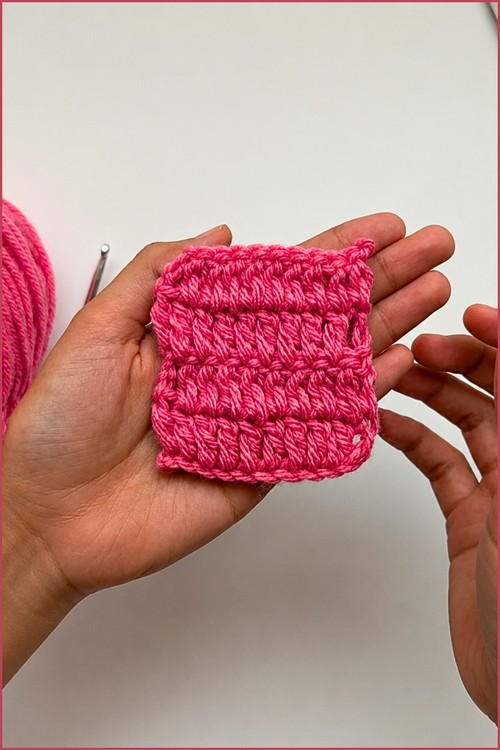
There’s a particular kind of satisfaction that comes from discovering a stitch that looks far more complicated than it actually is and the crossed double crochet is exactly that kind of stitch. The first time I worked a full row and flipped the fabric over to see that clean, woven X pattern running across the surface, I genuinely had to pause. It looked like something you’d find on a boutique shelf.
Crossed Double Crochet
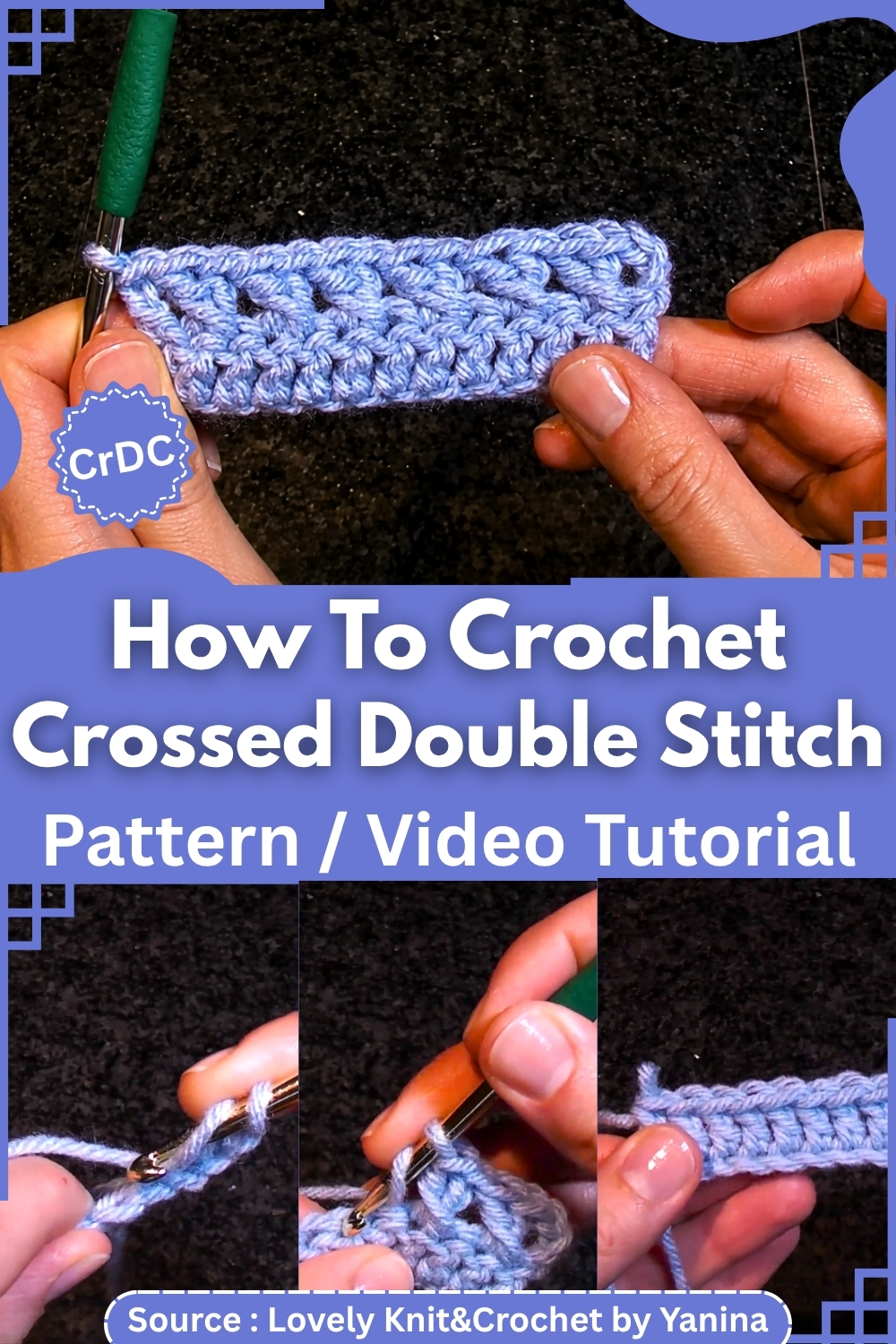
Crossed stitches have this wonderful way of building dimension into your fabric without requiring you to do anything dramatically different from regular double crochet. If you can dc, you can do this. The technique is just a small shift in order work forward, then loop back and the result is a textile that feels deliberate and polished. Whether you’re planning a textured dishcloth, a cozy cowl, or just swatching something new to add to your stitch library, this tutorial walks you through everything clearly and completely.
Materials and Tools
- Any yarn weight (worsted is a great starting point for learning the stitch)
- Crochet hook sized appropriately for your chosen yarn
- Scissors
- Yarn needle for weaving in ends
- Stitch markers (optional, but helpful for keeping track of stitch pairs)
No specialty tools needed. This stitch works beautifully in every weight from lace to bulky — the texture simply scales up or down with your yarn.
Difficulty and Time
Skill level: Beginner to Easy Intermediate Best for: Anyone comfortable with double crochet who wants to explore more textured stitches Time investment: A small learning curve on row one; the rhythm clicks quickly after the first few pairs
Abbreviations
ch — chain dc — double crochet st — stitch sk — skip
Understanding the Crossed Double Crochet
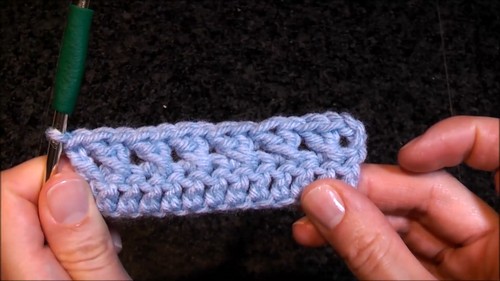
Before you begin, it helps to understand what the stitch is actually doing. Instead of working each double crochet in sequence, you intentionally skip a stitch, work into the next one, then loop back and work into the stitch you skipped. The second stitch physically crosses over the first, which is what creates that signature X shape on the fabric surface. The stitch you work first sits behind; the one you work second leans over it. That’s the whole mechanism — skip, work forward, work back. Once you feel the rhythm of it, it becomes meditative to repeat across a row.
The texture is most visible on the right side of your work. As you build rows, the woven effect grows more defined and satisfying.
Foundation Chain
- Chain a multiple of 2 stitches.
- For cleaner, straighter edges, chain a multiple of 2 plus 1 extra stitch. That extra chain gives you a regular dc at the end of the row to finish the edge neatly.
The Pattern
Row 1
- Ch 3 and turn.
- Skip the first stitch.
- Work 1 dc into the second stitch.
- Go back and work 1 dc into the skipped stitch.

- Skip the next stitch.
- Work 1 dc into the following stitch.
- Go back and work 1 dc into the skipped stitch.
- Repeat this sequence across the row.
- New to crochet and not sure how to read a pattern yet? The video tutorial below will guide you through it step by step, you’ve got this!
Edge finish (if you added an extra foundation chain): Work a regular dc into the final stitch. This keeps your side edges clean and consistent.

Repeat Row 1 for pattern.
Tips and Troubleshooting
- Insert your hook deliberately when working back into the skipped stitch. It can feel a bit awkward at first because the stitch you’re entering is sitting behind the one you just made. Take it slowly until the motion feels familiar.
- Keep your tension relaxed on the crossing stitch. If you pull too tight, the X shape compresses and the texture flattens. Give the second dc a little extra ease as you complete it — a looser hand makes a cleaner cross.
- Use a stitch marker to mark the beginning of every pair. When you’re learning, it’s easy to lose track of where one pair ends and the next begins. A removable marker every few stitches saves a lot of backtracking.
- Don’t accidentally skip two stitches in a row. This is the most common error — it shifts your whole pair sequence out of alignment and the row starts looking uneven. After each cross, you should always be moving into the stitch immediately following your completed pair.
- Check your stitch count at the end of each row until the rhythm is solid. Your total stitch count should remain consistent. If the edges look wobbly or the count is off, it’s almost always an edge stitch or an extra skip.
Customization Ideas
The crossed double crochet is endlessly adaptable once you know the base stitch:
- Color changes: Switch colors every two rows for a woven stripe effect that looks intentional and graphic.
- Yarn weight play: Use bulky yarn for a chunky blanket with serious visual impact; drop to fingering weight for delicate table runners or shawl panels.
- Textured combinations: Alternate one row of crossed dc with one row of regular dc for a subtler surface variation that still has dimension.
- Stitch count experiments: Wider panels of crossed stitch separated by single dc columns create a plaid-like grid effect.

Yarn Substitution Notes
This stitch works in any fiber, but smooth yarns — cotton, linen, smooth acrylic — show the X pattern most clearly. Fluffy or textured yarns (like mohair or bouclé) will soften the crossing effect and make it harder to see. That’s not wrong, just different. If clarity of stitch definition is your goal, reach for a smooth, plied yarn with good stitch clarity.
Frequently Asked Questions
1. Can a complete beginner learn the crossed double crochet? Yes, with one condition: you should be comfortable making regular double crochets before you try this one. If dc still feels uncertain, practice a small swatch of plain dc first, then come back. The crossed version is just dc in a different order, but you need the base stitch to feel natural before the variation makes sense.
2. Why does my fabric look flat instead of textured? Almost always tension. If you’re pulling the crossing stitch tight, the X collapses. Try loosening your grip when you work back into the skipped stitch and give the yarn a little extra room. You should be able to see and feel a slight ridge where the stitches cross.
3. What happens if I lose track of my stitch pairs mid-row? Stop, count back to your last clear X, and pick up from there. Don’t try to guess forward — the pattern will shift and the whole row will be off. Stitch markers every four or six stitches prevent this entirely once you’ve had it happen once.
4. Can I use this stitch for garments? Absolutely. It creates a fabric with beautiful drape and dimension, which works well for shawls, cardigans, yokes, and textured panels in sweaters. It behaves similarly to standard dc in terms of stretch and structure.
5. Does this stitch use more yarn than regular double crochet? Very slightly, because of the overlap in the crossing stitches. It’s not dramatic — you won’t need to buy an extra skein for a small project — but factor in a small additional amount when working up yardage estimates for larger pieces.